Many companies around the world rely on uniforms to convey their brand and make sure their employees are presentable and recognizable. However, uniforms present many challenges. Consider:
- What kind of design do you want for the uniform?
- Are you providing the uniforms or asking employees to get their own?
- Where are you sourcing your uniforms, and who is producing them?
- What does your uniform say to customers and clients?
Designing, sourcing, and obtaining company uniforms is trickier than you might imagine. That's why we've put together this guide, to help you out through the process, start to finish.
What Are Your Goals with Your Uniforms?
The first thing you need to do is give some serious thought to what you want your uniform to be doing.
For some people a uniform is a big piece of advertising and brand recognition. People who only have a passing knowledge of your brand can, nevertheless, recognize the uniform and attribute your brand with the presentation and performance of the people wearing it.
For other businesses, a uniform is about presenting a, well, uniform appearance. The servers in a restaurant, the sales floor and cashier workers at a department store, the attendants at a hotel; these uniforms help differentiate employees from random people, and when the uniforms are well-made, it provides a professional and clean appearance.

For some firms, a uniform is a matter of functionality as much as it is form. Uniforms can be protective, like medical scrubs, or functional, like high-vis gear. In a sense, one of the most functional uniforms in the world is that worn by the military.
Uniforms can also be a key part of employee spirit, collaborative mindsets, and team unity. Getting a group of people together and putting them all in the same uniform has a deep psychological impact on their connection to one another.
Deciding what your goals are for your uniforms is the first step to figuring out what design you need, where you want to get them, and how you want to manage them.
Consider the Details of the Uniform
When you have some idea of what your overall purpose will be for your uniforms, you can start to think about the tangible details.
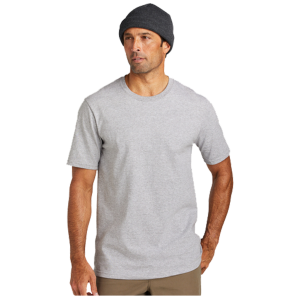
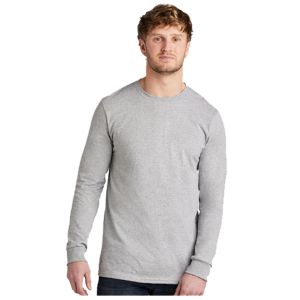
Form Factor. What garments, specifically, make up your uniform? Some companies only issue guidelines, like "khaki pants and a red shirt," and call it good enough. Others have full outfits, including an embroidered polo, a particular kind of pants, shoes, and even belts and accessories. Working uniforms also have more specific design considerations. So, pin down whether you need a polo, a button-up, a set of outerwear, or something else entirely. Remember that the uniform is a whole package, and the more you specify, the more you need to source and provide.
Fabric. The choice of fabric will be an important consideration. Cotton blends or pure cotton are usually the best in terms of durability and function, but in certain situations (like healthcare, outdoor work, or highly physically demanding jobs), you may want something with more specialized features.

Fit. The design of your uniform needs to be crisp and clean, even if it's primarily a functional uniform, and proper fit is essential. Fit plays a role in:
- Comfort: a uniform that doesn't fit right will be irritating to wear.
- Function: a uniform that doesn't fit right will get in the way of movement.
- Durability: a uniform that doesn't fit right will be stressed in places and fail prematurely.
- Appearance: a uniform that doesn't fit right can look disheveled and unkempt.
You will also need to consider your employees, and the range of genders, physical sizes, heights, and measurements. While you probably aren't going full tailored uniforms, having appropriate sizes for everyone is critical, and not all suppliers can supply the more exotic sizes or combinations.
Purpose Concerns. You also need to remember that some industries have regulations on what you can and can't use for uniforms. You may need a uniform made with antimicrobial fabrics, a uniform completely free of metallic buttons or zippers, or a uniform that has flame-retardant properties. Make sure you know any specific considerations that could impact the composition or design of the uniform.
Ethics. A big consideration in our book is the ethics of the uniform's origin. All else being equal, we will always prioritize a uniform made with ethically-grown cotton or natural materials over synthetics, created with ethical labor and not exploited children or underpaid workers, and made domestically rather than made overseas and shipped using massively polluting transoceanic transportation.
Obviously, there may be overriding concerns that mean you can't just use organic cotton, but for the most part, you can source what you need from an ethical and sustainable company rather than the lowest possible bidder.
In fact, we offer several options, like customizable uniform polo shirts, that can be perfect for your business uniforms. All you need to do is browse our store, find a base garment that works for your needs, and reach out for any details or questions you may have. We can even help you with a custom design if you don't have one in mind already.
Develop the Design of the Uniform
Once you have an idea of the specific garments you're going to be using for your uniform, you can start to build the actual design.
Sometimes, this isn't necessary; all you need is coordination with colors and formality that is unlikely to be common in your customers. Other times, you need to get your garments printed or embroidered. In fact, that's one key decision point right there. Do you get them printed or embroidered?
Embroidery lasts longer, and you can use custom embroidery for the wearer's name in a complete customization of the uniform. But, it's also more expensive, and if the underlying garment shrinks or warps, the embroidery can become a point of tension and wear. Printing, meanwhile, can be done in many ways, with different considerations in terms of vibrancy, complexity, and durability in the design.

You should also consider if you're doing "simple" customization or more complex customization.
A simple customization might just mean putting a business logo on the front or back of a shirt, embroidering a logo in a breast pocket, or just ensuring the right colors in a uniform. More complex customization can include individualized embroidery, or customization by adding lines, piping, or color to the hems and trim of the uniform, adding a logo to buttons or zippers, or even customizing the color of the stitching of the garment. Depending on who you work with, all of this can be customized.
Evaluate Your Uniform Budget
Someone has to pay for your uniforms. Even if you pass the cost onto your employees (though we don't think you should), someone needs to put the money up front for the design and the commissioning of the uniforms so they can be available for purchase. Ideally, you'll foot the bill as a business expense.

We're not going to dwell too much on it, but we do recognize that some businesses don't have a significant budget for uniforms. You may need to cut back on the complexity of the design or change elements to reduce costs. Ideally, you'll work with a supplier who can help guide you to the right balance, but that brings us to the next point.
Avoid the Common Mistakes
There are always a handful of mistakes people make when designing uniforms, and it's important to recognize and avoid them so you don't waste time and money.

Here are the mistakes you should be aware of:
- Don't prioritize fashion over comfort. While sometimes a uniform will be uncomfortable in unavoidable ways, like safety gear, if you're doing something like mandating high heels for no reason but fashion, reconsider.
- Don't chase trends. If you're focusing more on contemporary trends than business goals and perspectives, you'll quickly find that your uniforms look dated after just a year or two. It's a huge waste to then have to rebrand again, and again, and again.
- Don't go with the lowest bidder. Again, not only are there ethical concerns, but there's a decent chance you're going to end up with something inconsistently made, riddled with errors, and low quality enough that you'll be burning through them.
As long as you're aware of the pitfalls, you can avoid them and come out the other side with a great uniform.
Picking a Supplier for Your Uniforms
Picking a garment manufacturer to work with for your uniforms can be surprisingly difficult. While we obviously recommend ourselves, we're also fully aware that there are limitations on what we can provide. If you need a garment we don't offer, you'll have to find someone who makes it, and that market can be difficult to sort through.

Start by seeking potential suppliers and making a list. Then, gather information about them.
- Sizing. Are they flexible enough to cover all of your undersized and oversized employees?
- Customization. Can they do all of the customized details you want, or are they more limited?
- Sourcing and ethics. Do they get their base materials in a sustainable way? Do they employ ethical or union labor to manufacture garments? Are they part of any garment unions or organizations?
- Company details. Have they been in business for a while? Do they have a good reputation? Are they communicative and responsive?
- Pricing. How much does it cost to buy the uniforms? Are there added fees? Are there volume discounts or reorder benefits?
- Capacity. Does the facility you're considering have the ability to make as many uniforms as you need in a timely manner?
Actually finding uniform suppliers can be surprisingly tricky as well. While you can see what Google surfaces, you might also consider talking to business owners whose uniforms you like and ask where they get theirs, or look into supplier directories and other resources for business owners.
Request Samples of Your Uniform Design
Once you've narrowed down a shortlist of possible vendors, it's time to start requesting samples. Make the sample incorporate everything you want in your uniform design, including individualization if relevant.
Generally, a garment manufacturer will be more than happy to send over a sample so they can work with you to iron out any issues, miscommunications, or changes in design before going into production. Your job is to evaluate both the product and the process.

For the process, keep an eye on how well they communicate, how responsive they are, and how fast the sample is produced and shipped. Make note of issues in shipping, though those may not necessarily be the fault of the vendor, they can still be impactful.
For the product, look at all of the fine details. How is the fit? How is the finish? Are there uneven stitches, inconsistent fabric quality, a mix-up in colors or designs? You want an immaculate uniform.
This is also your opportunity to evaluate your own design and see if it all works and makes sense. Consider sending it around to various managers and employees to get their feedback as well; they might have a perspective that you missed.
Make Your Order
Once you've evaluated samples, you can pick a vendor and make your order. This is just like any other business deal, but you have to decide how you're going to manage uniform fulfillment. Some uniform vendors have systems set up where, once your design is finalized, employees can go to a portal and order their own directly. Other times, you may need to place an order for the number and sizes you need, which might involve polling your employees, which is a whole process itself.
Ideally, the manufacturing and fulfillment process will go smoothly, and you'll come out the other side with well-designed, ethically-made, and high-quality uniforms to incorporate into your business branding and employee look.

Once again, we offer our services, both as an apparel source and as designers. Whether you need help putting together a uniform, or you have a design and just need it made, give us a call and we'll do what we can to help you out.

Daniel Cardozo, CEO of Ethix Merch, is a passionate advocate for ethical promotional products. With a mission to transform global supply chains, he serves on the Labor 411 Foundation and Advertising Specialty Institute's Promo for the Planet Advisory Board. Daniel is dedicated to empowering socially and environmentally-conscious consumers.